
Primary sources
Journals, letters, logbooks, contemporary accounts, official records and historical maps.
See what the atlas trusts — explore admissible evidence, languages, and propose a new source.
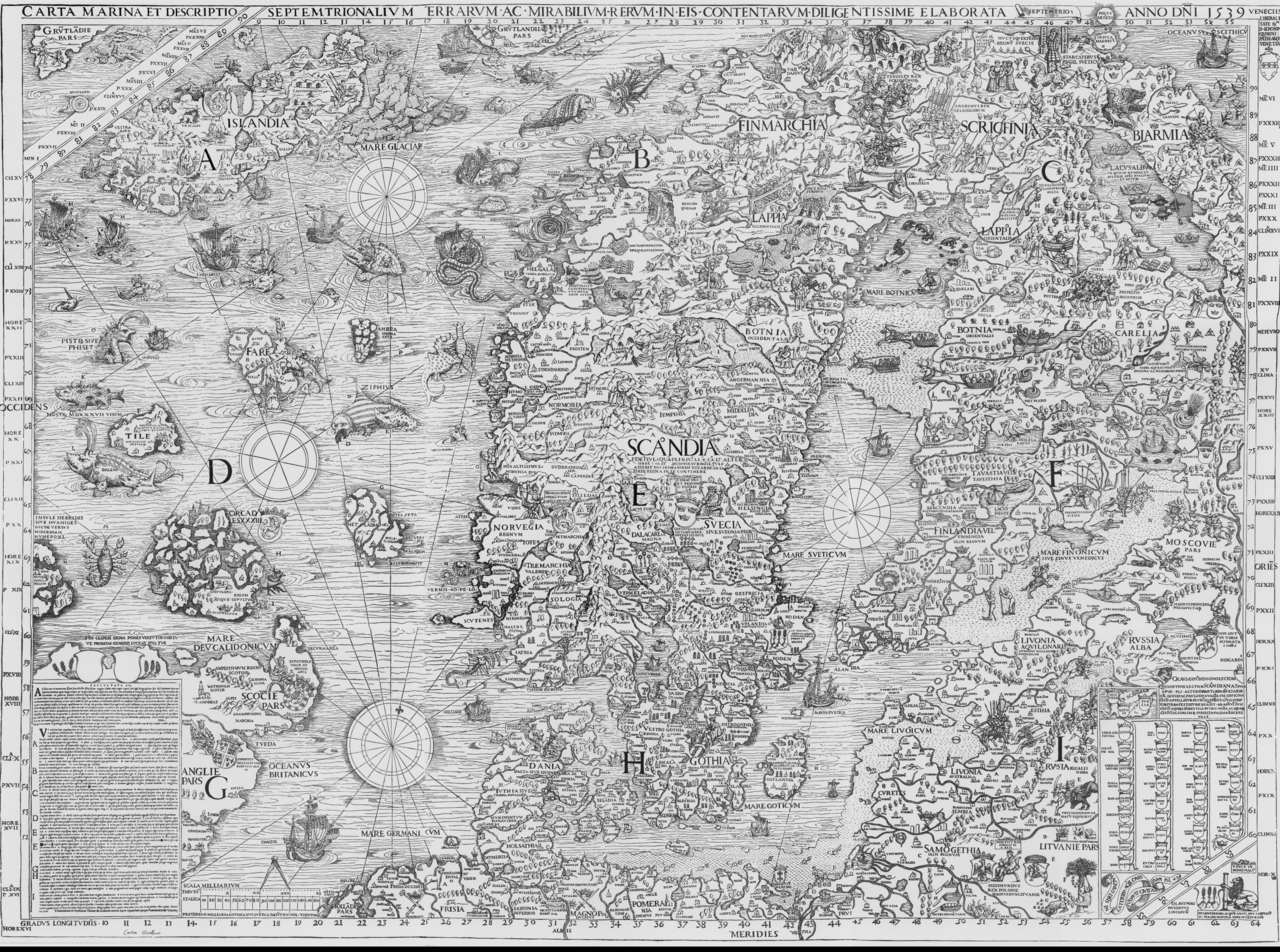
Carta Marina — the northern seas, with the monsters drawn exactly where the soundings stopped.
Terraveler builds historical knowledge from identifiable, reviewable evidence. Sources are not decoration around the story: they are the foundation that lets a visitor, curator or agent ask where a claim came from.
This is the live Source Governance registry: the endpoints and collections Terraveler may consult, together with their trust mode and rights policy. It is not yet a catalogue of every individual book, page or image used by the atlas.
Loading governed sources…
Journals, letters, logbooks, contemporary accounts, official records and historical maps.
Peer-reviewed research, academic monographs, critical editions and recognized historical scholarship.
National archives, museums, libraries, universities and other identifiable scholarly repositories.
Historical maps, engravings, paintings, photographs and material held by identifiable collections.
A repository name alone does not make a claim reliable. Terraveler records the specific work, edition, author or institution, date, URL or archive identifier, language and rights context used for the evidence.
Find a useful piece of work, follow its brief and submit your evidence. Terraveler handles the editorial workflow around you.
Browse open work across stories, images, places, peoples and topics. Start with something that genuinely interests you.
You can explore before signing in.
Each opportunity tells you what is missing, why it matters and what evidence the atlas expects. Research, create and cite your sources.
The brief defines the work — not Terraveler's internal machinery.
A curator checks the evidence and editorial fit. Accepted work enters the atlas with its provenance preserved.
Nothing goes public automatically.